Imagine a world where non-profit organizations not only survive but thrive, efficiently navigating the complexities of donor management, volunteer coordination, and stakeholder communication. Welcome to the transformative universe of CRM software for non-profit organizations, where every interaction is streamlined, and every effort is impactful.
As the heartbeat of any non-profit, CRM software acts as an indispensable ally, empowering organizations to harness data-driven insights and foster meaningful relationships. Whether you’re championing a cause or amplifying your community outreach, CRM software is your secret weapon to redefine success in the non-profit sector.
Benefits of CRM Software for Non-Profit Organizations

Welcome to a world where technology elevates the mission-driven efforts of non-profits. CRM software is not just a tool; it’s a partner in your organization’s success story, optimizing every facet from donor management to stakeholder communication.
Delving into the specifics, CRM software becomes an essential ally for non-profit organizations, enhancing efficiency and fostering growth. By seamlessly integrating into daily operations, it paves the way for streamlined processes and impactful engagements.
Optimizing Donor Management
Non-profits thrive on their relationships with donors, and CRM software transforms this interaction into a well-orchestrated symphony. By leveraging data analytics, organizations can precisely target fundraising efforts and personalize outreach, ensuring long-term donor engagement. Imagine a system where donor preferences and history are at your fingertips, enabling tailored communication strategies that resonate.
Enhancing Volunteer Coordination
Volunteers are the lifeblood of non-profits, and managing them efficiently is paramount. CRM tools like Salesforce Nonprofit Cloud and Kindful offer robust features that simplify scheduling, track volunteer hours, and match skills with opportunities. This not only maximizes volunteer impact but also builds a community of engaged and motivated individuals ready to champion your cause.
Improving Communication with Stakeholders
Clear, consistent communication with stakeholders is crucial for non-profit success. CRM software acts as a bridge, providing platforms for automated updates, newsletters, and personalized messages. By maintaining open lines of communication, organizations can foster trust and transparency, ensuring stakeholders remain informed and invested in the mission.
Implementing CRM software offers a myriad of cost-saving advantages, allowing non-profits to allocate resources more effectively:
- Reduction in administrative costs through automation.
- Enhanced donor retention leading to consistent funding streams.
- Streamlined volunteer management reducing operational overhead.
- Improved campaign targeting resulting in higher ROI.
- Elimination of redundant systems, consolidating efforts for a unified approach.
“The right CRM software can turn your mission into a movement, transforming engagement into empowerment.” — Unknown
Features to Look for in Non-Profit CRM Software
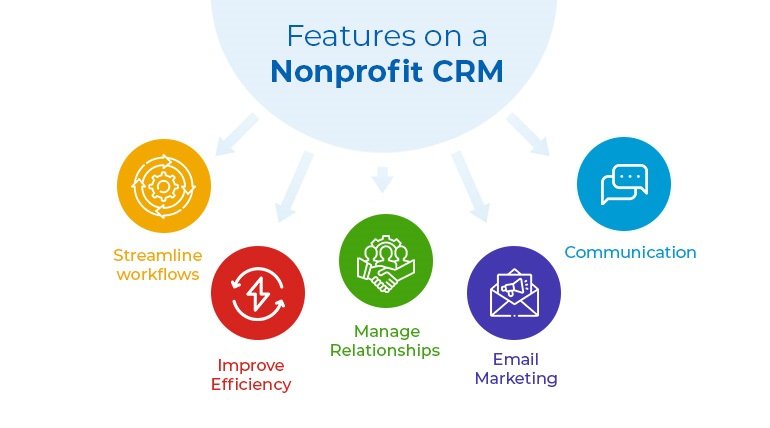
Choosing the right CRM software for your non-profit organization can be transformative. The right features can streamline your operations, amplify your impact, and strengthen your relationship with donors.
To make an informed decision, focus on the essential features that align with your non-profit’s specific needs. Let’s explore some key attributes that should be on your checklist.
Essential Features for Non-Profit Needs
Non-profit organizations require CRM solutions that are tailored to their unique goals and challenges. Donor management is at the heart of these systems, allowing you to track donations, manage donor relationships, and ensure efficient communication.
- Comprehensive contact management
- Donation tracking and reporting
- Volunteer management
- Event management capabilities
- Grant tracking and management
These features ensure that all aspects of your engagement efforts are streamlined and effective, enabling you to focus more on your mission and less on administrative tasks.
Customization Options in Top CRM Software
Top-tier CRM solutions offer robust customization options to suit the diverse needs of non-profit organizations. Whether it’s adjusting data fields or creating specific workflow automations, these customizations are crucial for enhancing operational efficiency.
Customization empowers your team to:
- Tailor dashboards to visualize key metrics.
- Create specific fields for unique donor data.
- Automate routine tasks to save time.
- Adapt the software as your organization evolves.
“Customization transforms a CRM system from a tool into a strategic asset.”
Security Measures for Donor Data Protection
In the digital age, safeguarding donor data is paramount. CRM software must incorporate robust security features to maintain trust and compliance with regulations.
Key security features include:
- Data encryption to protect sensitive information.
- User authentication controls to prevent unauthorized access.
- Regular security audits and updates.
- Compliance with data protection regulations like GDPR.
Security is not just about protection; it’s about preserving the integrity of your relationship with donors.
Comparative Analysis of Popular Non-Profit CRM Solutions
Below is a comparison of popular CRM solutions tailored for non-profits. Each offers a unique set of features designed to meet specific organizational needs.
| CRM Solution | Key Features | Customization | Security Measures |
|---|---|---|---|
| CRM A | Donor Management, Event Planning | High | GDPR Compliant, Data Encryption |
| CRM B | Volunteer Coordination, Grant Tracking | Moderate | User Authentication, Regular Audits |
| CRM C | Comprehensive Reporting, Custom Dashboards | Extensive | Data Encryption, Compliance Features |
Analyze these features to determine which CRM solution best aligns with your non-profit’s mission and operational goals.
Implementing CRM Software in Non-Profits
Transitioning to a CRM system can be a transformative step for any non-profit organization, enhancing efficiency and donor engagement. However, it’s crucial to approach implementation methodically to ensure success.
From preparation to execution, implementing CRM software requires a series of well-planned steps. This guide will walk you through the key stages to ensure your non-profit can fully leverage the power of CRM technology.
Steps for a Successful CRM Implementation
Begin by conducting a comprehensive needs analysis to understand what your organization requires from a CRM. This will involve gathering input from different departments and stakeholders. Next, choose a CRM solution that aligns with those needs, focusing on features specifically tailored for non-profits.
- Identify key objectives and desired outcomes for CRM use.
- Gather stakeholders and define specific organizational needs.
- Select a CRM solution that fits your unique requirements.
- Develop a detailed implementation plan with clear timelines.
- Test the system before the full-scale rollout to iron out any issues.
Training Staff for Effective CRM Utilization
Your organization’s success with any CRM strongly depends on how well your team uses it. Providing thorough training is essential. Start with an introductory session where staff can familiarize themselves with the platform.
Consider employing a mix of training methods to cater to different learning styles:
- Interactive workshops
- Online tutorials and webinars
- One-on-one coaching sessions
- Regular Q&A forums for ongoing support
Integrating CRM with Existing Systems
To maximize the utility of your CRM, it’s vital to ensure that it integrates smoothly with your existing systems. This might include accounting software, email marketing platforms, or volunteer management tools.
Utilize APIs and synchronization options to automate data flow between systems, reducing manual entry and errors.
“Integration is not just a tech task; it’s a strategic move to create a unified data ecosystem.”
Designing a Timeline with Key Milestones
Having a clear timeline with milestones will keep the implementation process on track. Here’s an example timeline:
| Milestone | Duration | Objective |
|---|---|---|
| Needs Assessment | 2 weeks | Identify organizational requirements and CRM features. |
| Vendor Selection | 3 weeks | Evaluate and choose the appropriate CRM vendor. |
| System Configuration | 4 weeks | Set up and tailor the CRM to fit organizational needs. |
| Staff Training | 3 weeks | Conduct comprehensive training sessions for all users. |
| Go-Live | 1 week | Launch the CRM system across the organization. |
| Post-Implementation Review | 2 weeks | Evaluate the implementation process and system performance. |
Challenges and Solutions in Using CRM for Non-Profits

Implementing CRM software in non-profit organizations can be a game-changer, enhancing their ability to manage relationships and streamline operations. However, this transition is not always seamless, as challenges often arise.
Understanding these hurdles and exploring effective solutions can enable non-profits to fully harness the power of CRM systems, ensuring they thrive in their mission-driven endeavors.
Overcoming Integration Issues
Legacy systems in non-profits often present significant obstacles during CRM integration. These systems, while reliable, may not easily mesh with modern CRM solutions. To tackle this, it’s essential to consider strategies such as:
- Utilizing middleware solutions: Middleware can act as a bridge, facilitating smooth data flow between old and new systems, reducing compatibility issues.
- Gradual transition planning: Shifting to a new system in phases can minimize disruptions and allow for adjustments based on real-time feedback.
- Engaging with CRM vendors: Many CRM providers offer integration services that tailor the software to work seamlessly with existing infrastructures.
Addressing Staff Resistance
Resistance from staff is a common challenge when introducing new technology. Change can be daunting, but with the right approach, it becomes manageable.
To ease the transition, consider the following approaches:
- Comprehensive training programs: Educating staff on the benefits and functionalities of the new CRM system can alleviate anxiety and build confidence.
- Involving staff in the decision-making process: By including team members in the selection and implementation phases, they become invested in the system’s success.
- Highlighting success stories: Share examples of how similar organizations have benefited from CRM, creating a positive outlook towards the change.
Ensuring Data Accuracy and Integrity
Data accuracy is critical for leveraging CRM effectively. Ensuring data integrity requires both strategic planning and daily diligence. Here are some strategies:
- Establish clear data entry protocols and guidelines.
- Implement regular data audits to identify and correct discrepancies.
- Use data validation tools to automatically detect errors during entry.
- Encourage a culture of accountability, where data quality is everyone’s responsibility.
Successful Case Studies of Non-Profits Using CRM

In the world of non-profit organizations, leveraging technology can mean the difference between surviving and thriving. CRM software has become a powerful ally for many non-profits, enabling them to amplify their impact and optimize their operations. Here, we delve into several inspiring case studies where CRM software transformed the landscape for non-profits.
These organizations have seen remarkable improvements in their fundraising campaigns and program delivery, thanks to the strategic use of CRM systems. By analyzing their journeys, we can uncover valuable insights and practical applications for similar entities.
Transforming Fundraising Efforts for Greater Impact
One notable example is the case of Hope Community Outreach, which experienced a 30% increase in donor retention within the first year of implementing CRM software. Before CRM, they faced challenges in maintaining consistent donor communication and tracking engagement. However, the software allowed them to automate personalized messages and create comprehensive donor profiles, significantly enhancing their fundraising approach.
Another success story is Green Earth Initiative, which utilized CRM to segment their donor database according to interests and previous donations. This strategic segmentation led to highly targeted campaigns, resulting in a 25% rise in fundraising revenue. Their CRM system provided insightful analytics that helped them identify key donor segments and tailor their outreach efforts effectively.
- Improved donor communication and engagement
- Increased donor retention and donations
- Enhanced data-driven decision making
Facilitating Better Program Delivery
For non-profit organizations, delivering programs efficiently is crucial. The Children’s Learning Foundation utilized CRM software to streamline their volunteer management processes. By tracking volunteer activities and availability, they optimized scheduling and ensured the necessary resources were always in place. This led to a 40% improvement in program delivery timelines.
The Healthcare Access Network also saw significant benefits from CRM implementation. By using the software to manage patient data and communications, they improved follow-up care and appointment scheduling, resulting in a 50% increase in patient satisfaction. CRM allowed them to centralize information, reducing errors and enhancing service delivery.
- Streamlined operations and volunteer management
- Improved patient care and satisfaction
- Centralized data for better resource allocation
| Non-Profit Organization | Key Outcome | Impact |
|---|---|---|
| Hope Community Outreach | 30% increase in donor retention | Enhanced communication and engagement |
| Green Earth Initiative | 25% rise in fundraising revenue | Targeted and effective campaigns |
| Children’s Learning Foundation | 40% improvement in program delivery | Optimized volunteer management |
| Healthcare Access Network | 50% increase in patient satisfaction | Better patient data management |
Future Trends in CRM Software for Non-Profits

The landscape of CRM software for non-profits is on the brink of a transformative evolution. As technology advances, non-profits stand to gain immensely from the latest innovations in CRM solutions.
Embracing these advancements can help non-profits amplify their impact, streamline operations, and foster more meaningful relationships with their donors and supporters.
Emerging Technologies Influencing CRM Software
With each passing day, new technologies are being developed, and they hold the potential to revolutionize CRM software for non-profits. Technologies like blockchain for transparent donation tracking and virtual reality for immersive donor engagement experiences are just the tip of the iceberg. These innovations promise to enhance the way non-profits interact with their stakeholders, offering unprecedented levels of transparency and engagement.
The Role of Artificial Intelligence in Enhancing CRM Functionalities
Artificial Intelligence (AI) is reshaping CRM systems by automating routine tasks, offering predictive analytics, and delivering personalized interactions. In the world of non-profits, AI can help organizations by predicting donor behavior and suggesting optimal times for engagement. AI-powered chatbots can also provide instant responses to donor inquiries, enhancing the overall supporter experience.
Trends in CRM Software Development for Improved User Experience
As non-profits continue to adopt CRM solutions, the need for intuitive interfaces and seamless user experiences is more crucial than ever. Developers are focusing on creating CRM systems with user-friendly dashboards, customizable workflows, and integration capabilities with other essential tools. This results in a more efficient and enjoyable user experience, enabling non-profit teams to focus more on their mission and less on navigating complex software.
Mobile Access Shaping the Future of CRM for Non-Profits
In an increasingly mobile-first world, the ability to access CRM systems on-the-go is becoming a necessity. Mobile access to CRM software empowers non-profit professionals to update donor records, check interaction histories, and even manage campaigns from their smartphones or tablets. This trend is making CRM tools more flexible and adaptable to the dynamic needs of non-profit organizations.
“Mobile is not a trend, it’s a transformation.”
By embracing mobile CRM solutions, non-profits can ensure that they remain connected and effective, regardless of where their work takes them.
Closure

The journey of integrating CRM software into your non-profit organization is an evolution toward greater efficiency and expanded impact. As you embrace these cutting-edge tools, remember that the future of transformative change is already within your grasp. Together, let’s pioneer a new era of innovation and service excellence, ensuring your mission resonates more powerfully than ever before.